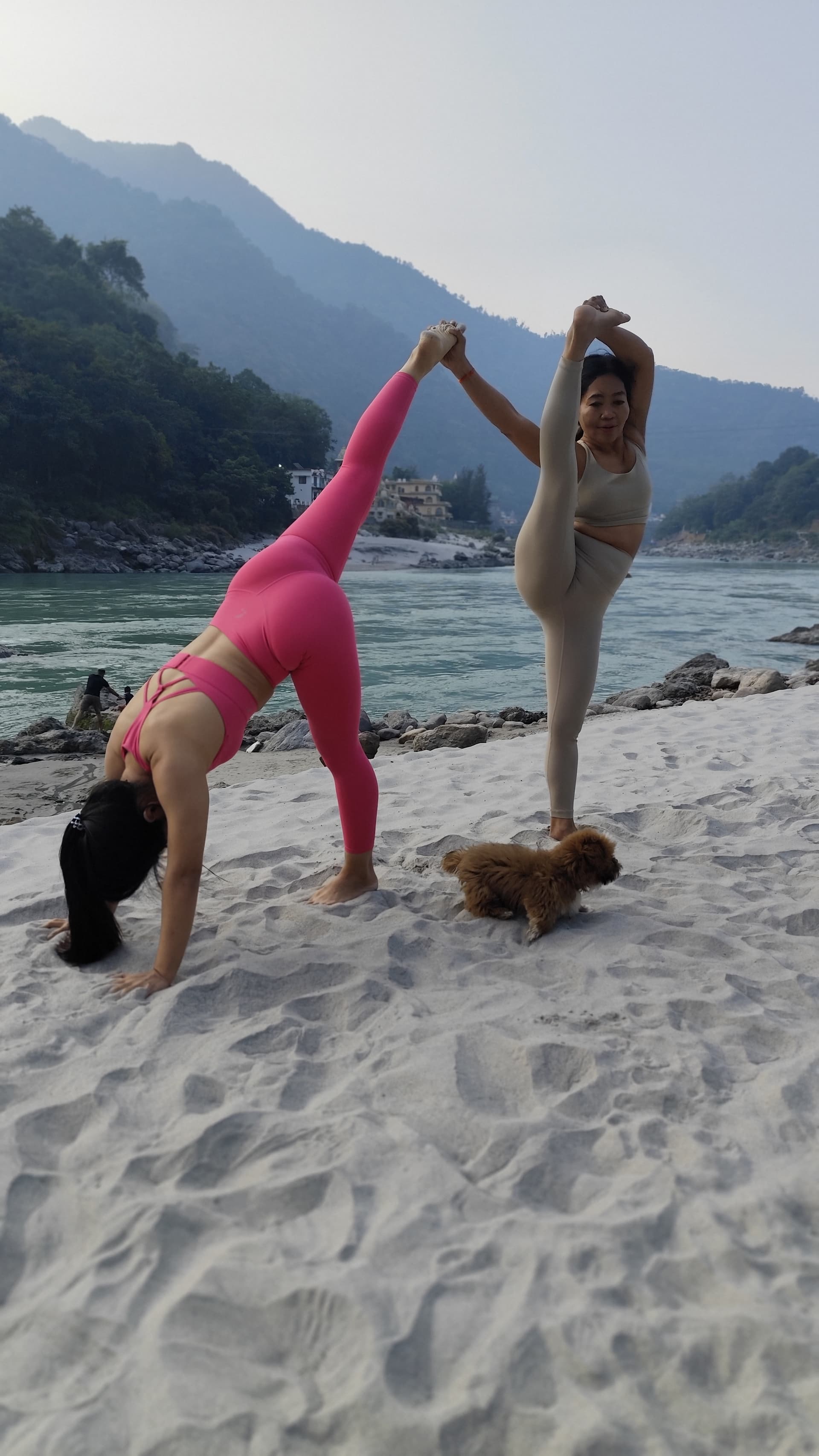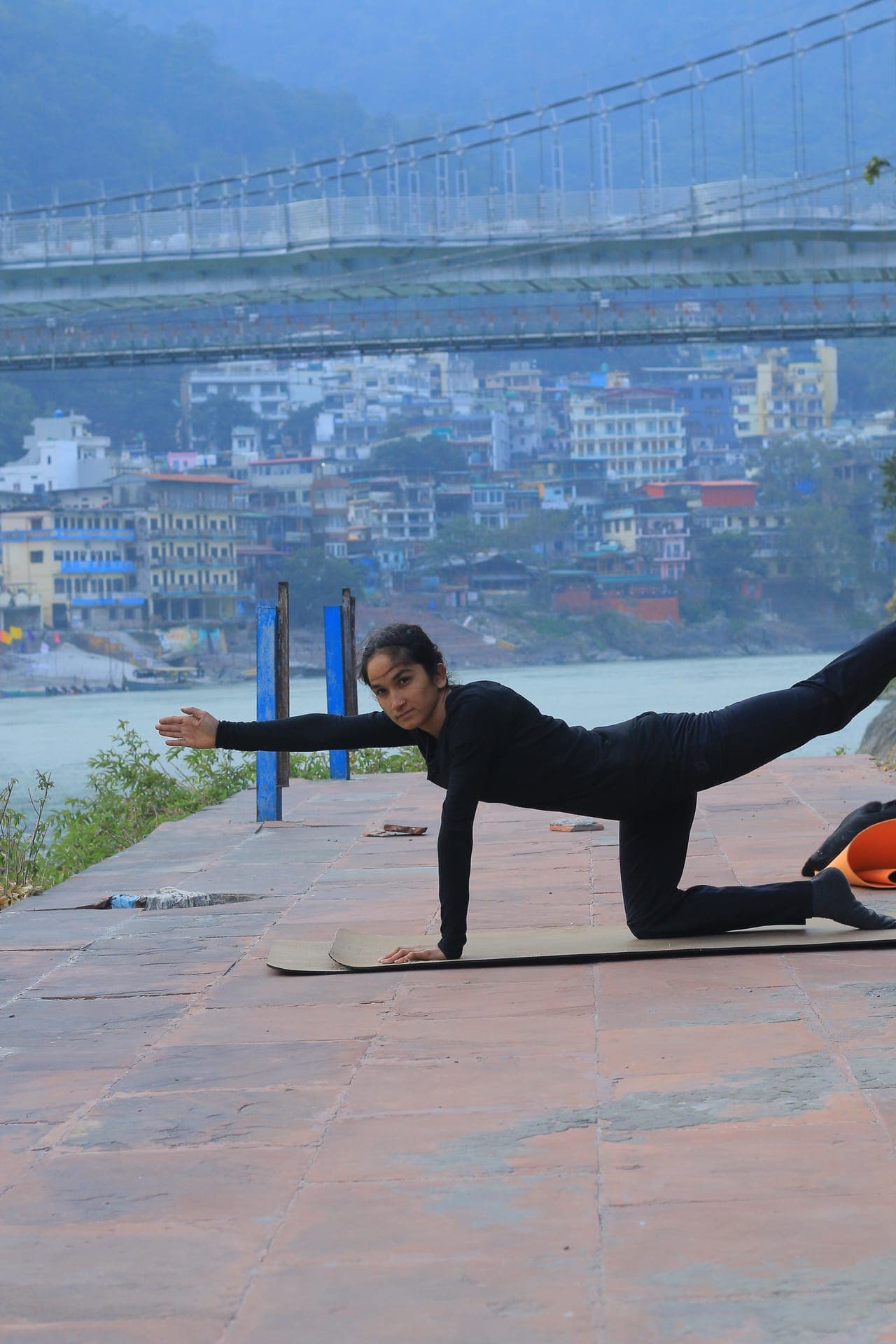
Sitting for hours quietly reshapes the body — hip flexors shorten, the lower back stiffens, shoulders round forward and the spine loses its natural mobility. The good news: a few targeted yoga poses, practised daily, can reverse most of it. This guide shares six poses that directly counter the effects of a desk-bound day. The practical guidance below is drawn from over a decade of training students at Swaastik Yog School in Rishikesh.
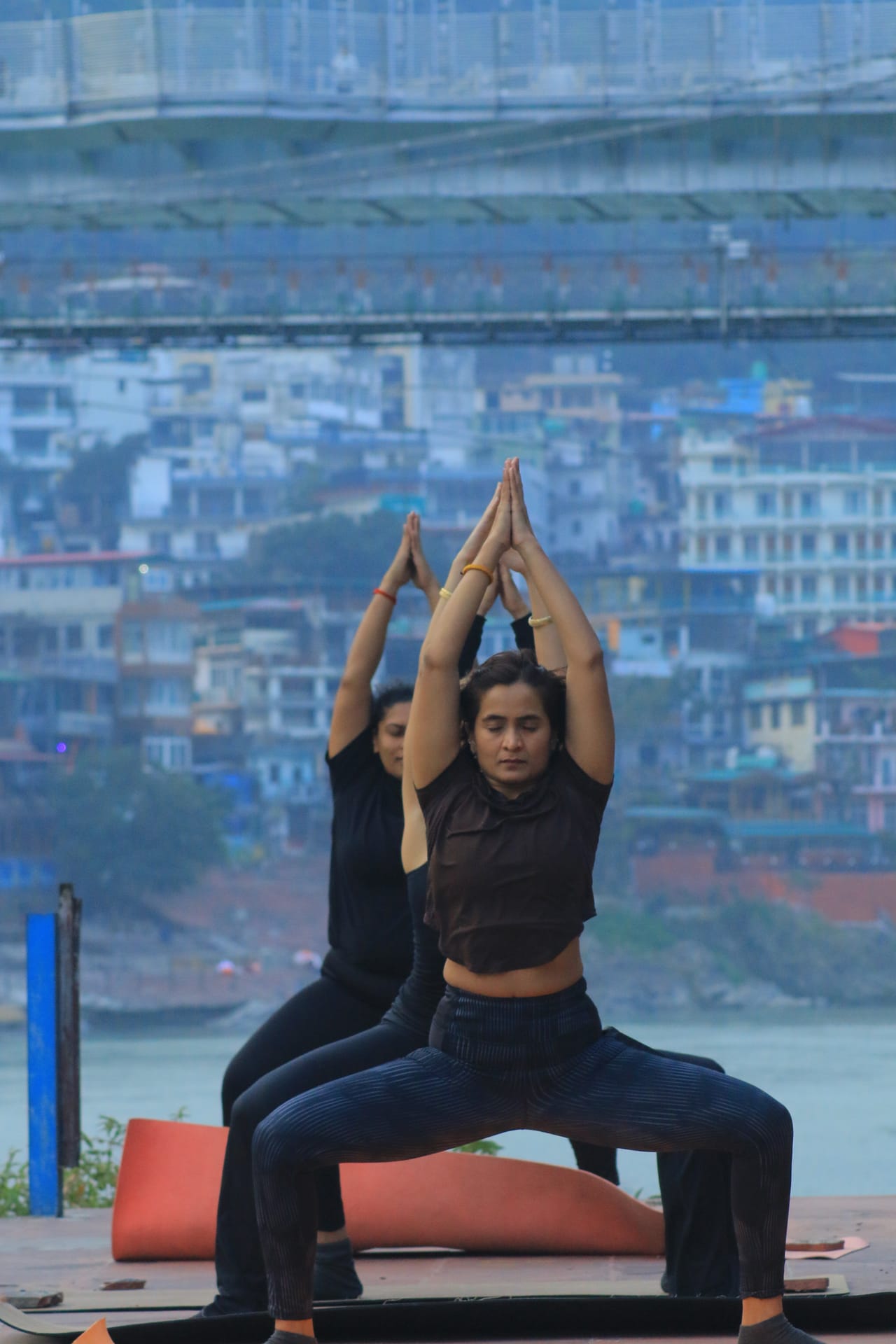
How Yoga Builds Strength and Flexibility
- Yoga combines static holds with dynamic movement for balanced fitness
- Standing poses build leg and core strength
- Forward folds and twists lengthen tight tissues without weights
- Slow holds train both muscular endurance and mental focus
- Visible flexibility changes appear in 6-8 weeks of regular practice
How to Practise Safely as a Beginner
- Practise 3-4 times per week, 30-60 minutes per session
- Always warm up before deep stretches
- Use blocks and straps freely — they help, not weaken you
- Hold poses for 5-8 breaths
- Take Savasana at the end of every practice without exception
Going Deeper
If this resonates and you want to take the next step, our 200-hour Yoga Teacher Training in Rishikesh covers if you spend all day sitting, you need these 6 yoga poses in much greater depth, with senior Indian teachers and a small batch size. For shorter immersions, see our yoga retreats page.
Frequently Asked Questions
Do I need prior experience to engage with this practice?
No. Most students begin with no prior yoga background. A genuine beginner mindset is far more valuable than physical experience — every teacher starts where you are now.
How long until I see results?
For most yoga practices, noticeable changes appear in 2-4 weeks of consistent daily practice (even 15 minutes). Deeper changes — flexibility, strength, mental clarity — accumulate over months and years.
Take the Next Step
Train with senior Indian teachers in Rishikesh, the world capital of yoga.
View Teacher Training See Retreats
.JPG&w=1920&q=75)