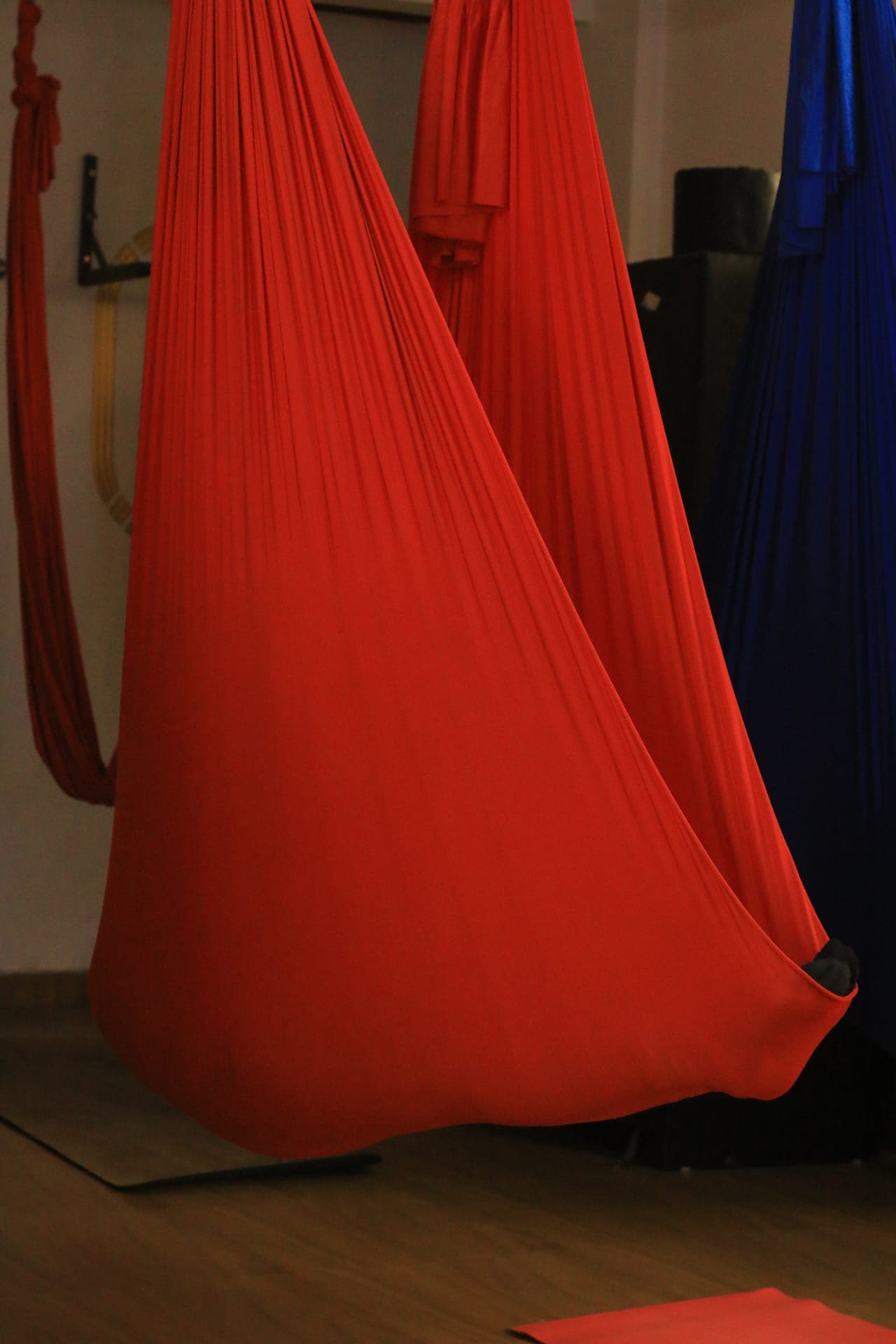
Aerial yoga is a contemporary style that uses a soft fabric hammock suspended from the ceiling to support, deepen, and decompress the body in traditional yoga poses. Developed in the early 2000s by Christopher Harrison from his background in Broadway aerial choreography, aerial yoga has become one of the fastest-growing yoga formats globally, particularly with students who find mat yoga inaccessible or want a more playful, therapeutic alternative. This guide explains what aerial yoga is, who it suits, what to expect in your first class, and how it compares to mat yoga.

How Aerial Yoga Differs from Mat Yoga
Three core differences:
- External support. The hammock takes part of your bodyweight in poses you would otherwise struggle to hold, making advanced shapes accessible from week one.
- Spinal traction. Hanging upside down or partially inverted decompresses the spine in a way no mat pose can. This is the single biggest therapeutic value of aerial yoga.
- Three-dimensional movement. The hammock allows rotation, lateral swing, and inverted variations that simply do not exist on a mat.
Benefits of Aerial Yoga
- Spinal decompression — particularly valuable for desk workers, drivers, and anyone with chronic lower back tension
- Accessible inversions — students who fear or cannot do mat headstands often invert safely in the hammock from their first class
- Improved core strength — the unstable hammock surface engages deep core muscles that mat poses do not reach
- Increased flexibility — the hammock helps you find safe end-range stretches in hips, hamstrings, and shoulders
- Reduced joint impact — useful for students with knee, ankle, or wrist issues that limit mat practice
- Better mood — being upside down floods the brain with endorphins; aerial students often report a noticeable mood lift after class
- Playfulness — aerial reintroduces the play and curiosity that adult yoga often loses
What to Expect in Your First Aerial Class
- 10 minutes of orientation — how to safely sit, stand in, and exit the hammock
- 15 minutes of warm-up — gentle joint mobility and breath, both on the mat and using the hammock as a prop
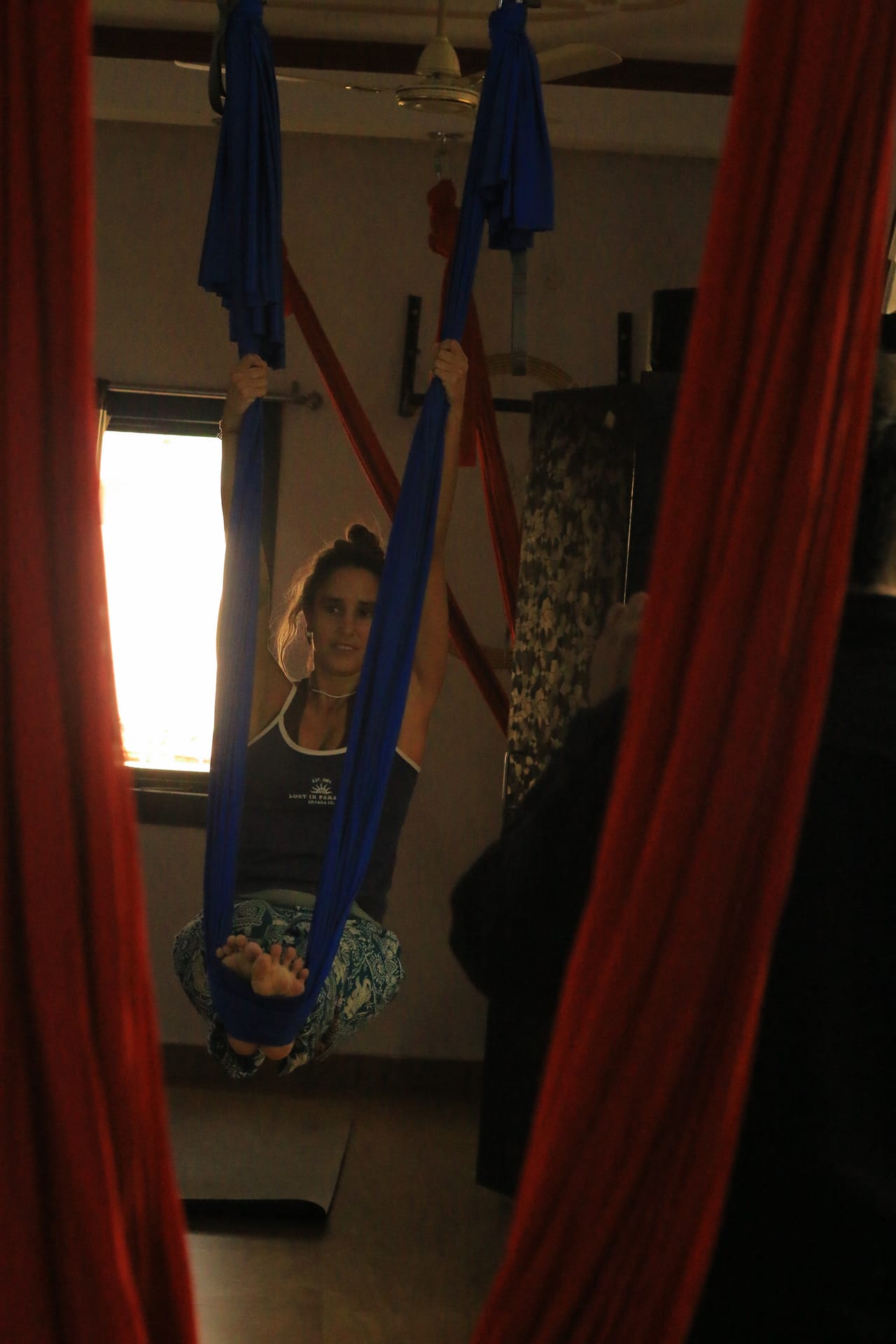
- 30 minutes of foundational poses — Hammock Sit, Crow's Nest, Star Pose, Sleeping Bird, Knotted Half Pigeon
- 10 minutes of supported inversions — beginning with simple folds where the hammock supports your hips while your hands stay on the floor
- 10 minutes of restorative finish — a gentle Vampire Pose or supported Savasana in the hammock
You should not be inverted upside-down for more than a few seconds in your first three classes. A good teacher prioritises your nervous-system adaptation over impressive photos.
Who Aerial Yoga Suits
- Office workers — the spinal decompression directly counteracts long sitting hours
- Students recovering from minor back pain — provided they are cleared by a physician
- Mat-yoga students who feel stuck — aerial often unlocks poses that have plateaued for months
- Active people who find traditional yoga "too slow" — aerial is more dynamic
- Adults rediscovering play — aerial is genuinely fun, in a way that few yoga formats are
Who Should NOT Practise Aerial Yoga
The following are absolute or strong contraindications. Consult your physician before practising:
- Untreated high blood pressure — inversions raise intracranial pressure
- Glaucoma or recent eye surgery
- Recent fractures, surgeries, or hernias
- Active vertigo or inner-ear disorders
- First trimester of pregnancy (some prenatal-trained teachers offer modified later-trimester aerial; ask specifically)
- Heart conditions without specialist clearance
How Often to Practise
2-3 sessions per week is the sweet spot for most students. Daily aerial is unnecessary and can over-load the shoulders. The classical recommendation is to mix aerial with one mat-based Hatha or Vinyasa session weekly to maintain ground-based stability.
Aerial Yoga at Swaastik Yog School
Our drop-in aerial classes run twice weekly. For students who want to teach, we run a 100-hour Aerial Yoga TTC with YACEP certification, led by Priya Sharma (RYT 500, 8+ years aerial-specific teaching). For comparison with other Indian aerial programmes see our best aerial yoga TTC in India guide.
Frequently Asked Questions
Will I be upside down in my first aerial class?
Briefly, with full support. A good teacher will not have you in a free hanging inversion for more than a few seconds in your first three classes.
Is aerial yoga safe for beginners?
Yes — provided the class is genuinely beginner-level (not just labelled "all levels") and the teacher has aerial-specific training.
Do I need any special clothing?
Yes. Wear leggings or full-length pants and a fitted top with sleeves. The hammock fabric can rub bare skin uncomfortably during inversions. Avoid jewellery, watches, or zippers that can snag the silk.
Try Aerial Yoga in Rishikesh
Drop-in classes twice weekly. Or join our 100-hour Aerial TTC for a deeper dive.
View Aerial TTC Drop-In Schedule
.JPG&w=1920&q=75)