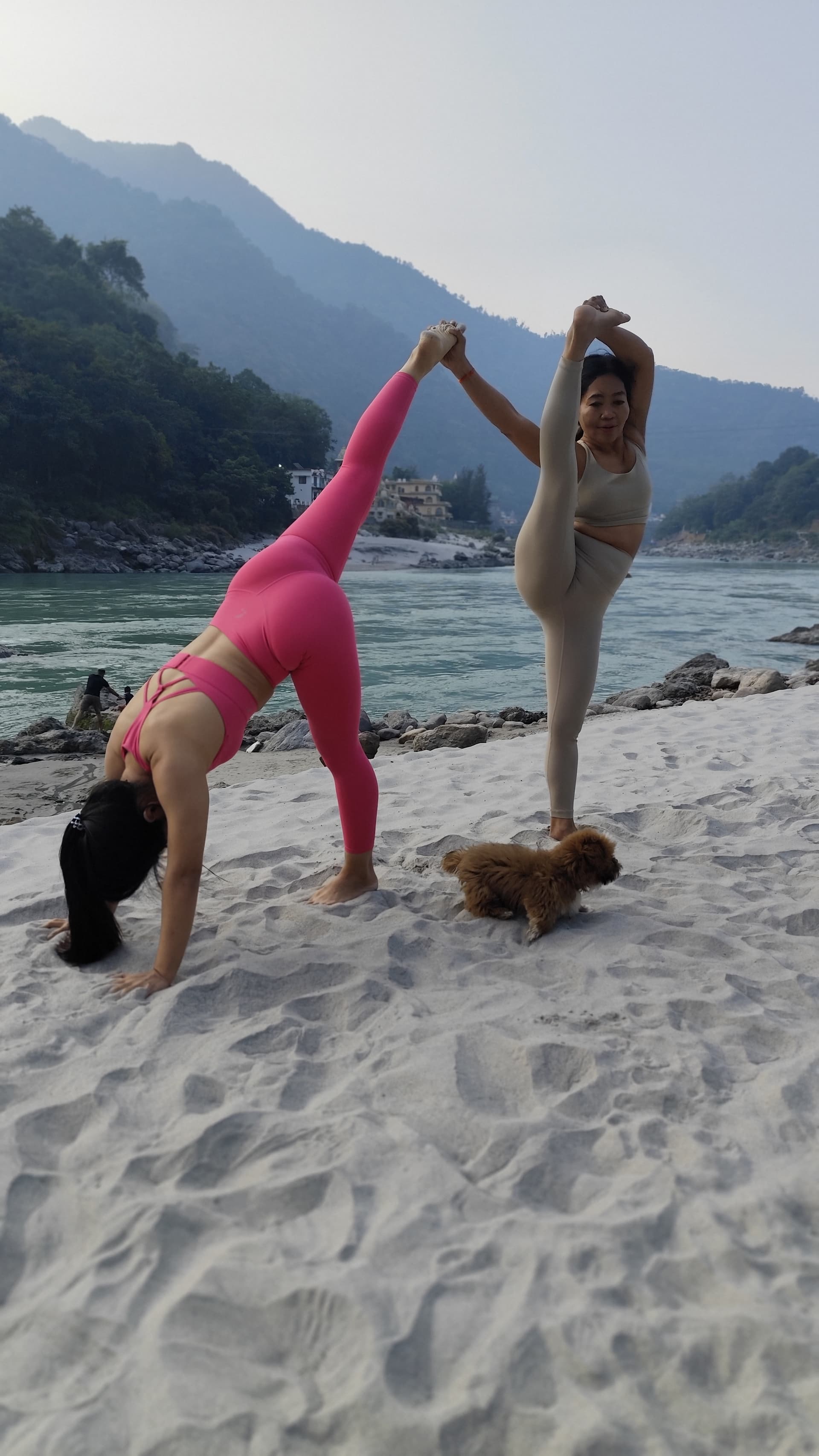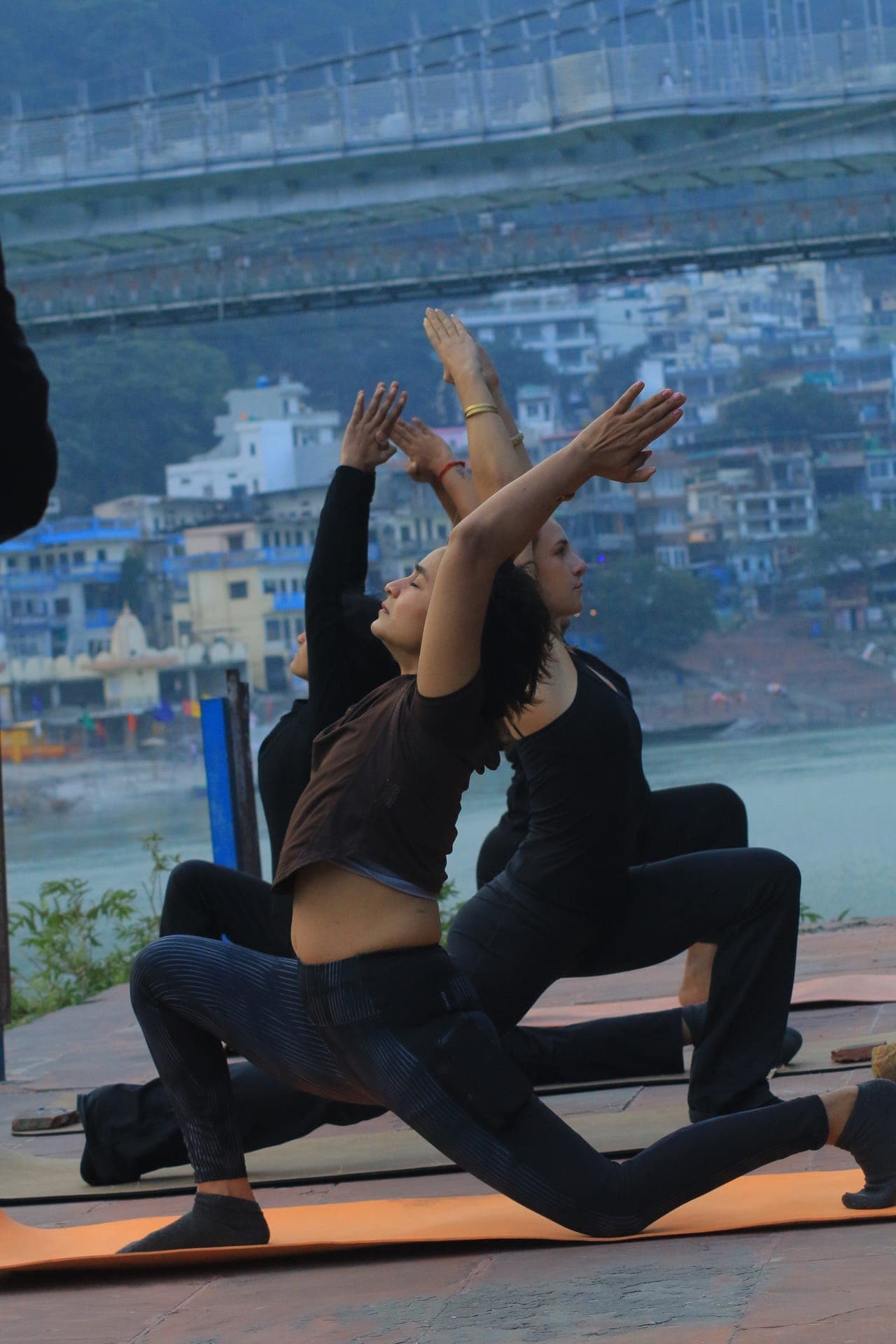
The five best yoga poses for beginners are the ones that build the foundation everything else stands on: Mountain Pose, Downward Dog, Warrior II, Child's Pose, and Corpse Pose. They cover the four directions of spinal movement (extension, flexion, lateral flexion, rotation), introduce mindful breathing, and can be practised safely at home in 15-20 minutes a day. This guide gives you each pose step by step, the most common mistakes, and a daily mini-sequence you can start tomorrow.
Why These 5 Poses Specifically
Yoga has hundreds of asanas. We chose these five because together they teach you the foundational skills every other pose builds on:
- Bodily alignment (Mountain Pose)
- Whole-body strength and length (Downward Dog)
- Standing stability and breath (Warrior II)
- Surrender and rest (Child's Pose)
- Conscious relaxation (Corpse Pose)
1. Tadasana (Mountain Pose)
Why it matters: The basis of every standing pose. If your Tadasana is shaky, your Warrior is shaky.
- Stand with feet hip-width apart, weight evenly distributed across all four corners of each foot.
- Engage the thighs, lengthen the tailbone toward the floor.
- Draw the lower belly in gently. Lift the chest without flaring the ribs.
- Roll the shoulders up, back, and down. Arms relaxed by the sides, palms facing forward.
- Crown of the head reaches up. Eyes soft, breath even.
- Hold for 8-12 breaths.
Common mistakes: locked knees, ribs flared forward, weight rolled into the inner edges of the feet, shoulders hunched.
2. Adho Mukha Svanasana (Downward-Facing Dog)
Why it matters: A full-body pose that strengthens the arms and legs while lengthening the entire posterior chain. The single most important pose in modern yoga.
- Start on hands and knees, wrists directly under shoulders, knees under hips.
- Tuck the toes under, lift the hips up and back to form an inverted V.
- Keep the knees softly bent at first. Lengthen the spine more than you straighten the legs.
- Press the floor away through the hands. Spread the fingers wide.
- Allow the head to hang. Heels reach toward the floor (they may not touch — that is fine).
- Hold for 5-10 breaths.
Common mistakes: rounded upper back, locked elbows, all weight in the hands, trying to force the heels down.
3. Virabhadrasana II (Warrior II)
Why it matters: Builds leg strength, hip openness, and standing endurance. Teaches you to find power and ease in the same pose.
- Step the feet 4 feet apart. Turn the right foot 90° out, the left foot 15° in.
- Bend the right knee directly over the right ankle, thigh parallel to the floor.
- Extend the arms parallel to the floor, palms down. Gaze over the right fingertips.
- Sink the hips. Press the outer left foot into the floor.
- Hold for 6-8 breaths. Repeat on the other side.
Common mistakes: front knee collapsing inward, back foot lifting, leaning the torso forward over the front leg.
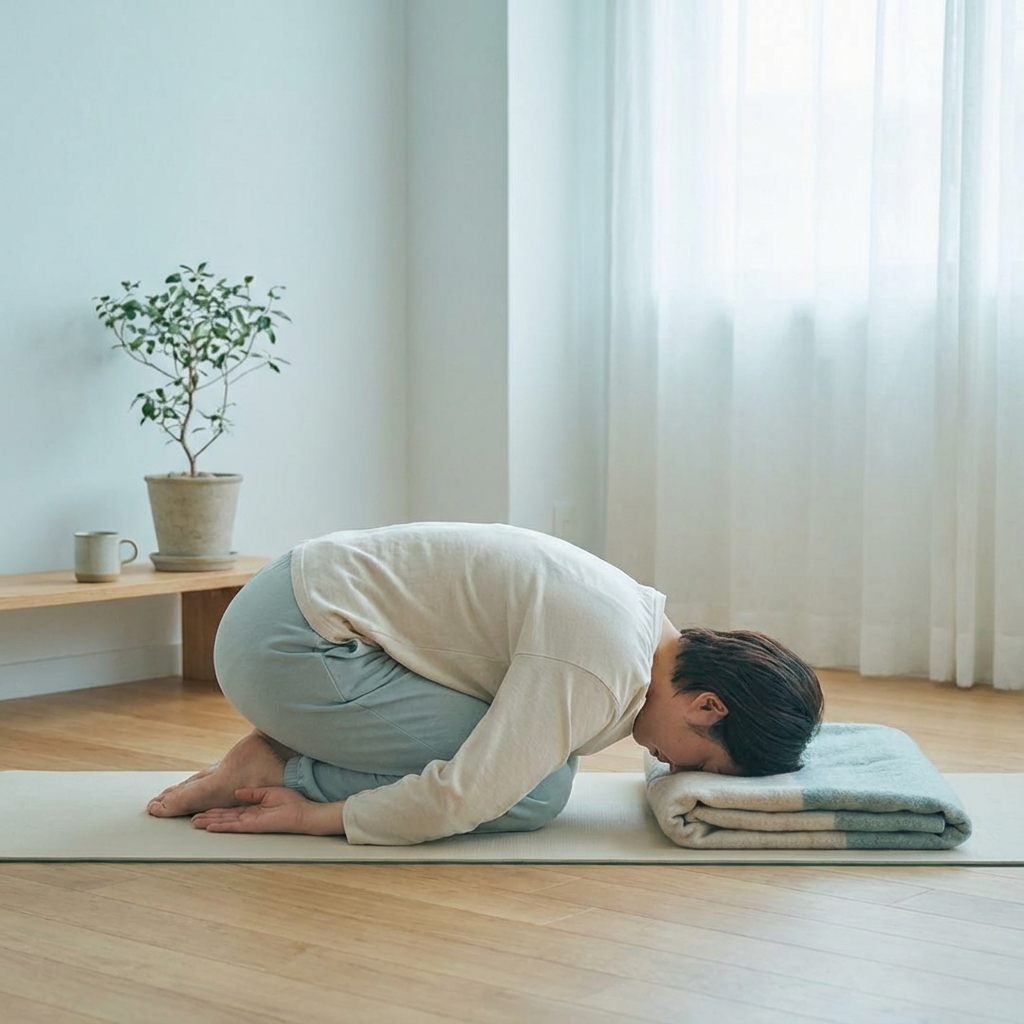
4. Balasana (Child's Pose)
Why it matters: The reset button. Every yoga student needs a place to rest mid-practice without leaving the mat.
- From hands and knees, bring the big toes together and the knees as wide as the mat (or together for a more compressive variation).
- Sit the hips back toward the heels.
- Lower the forehead to the floor. Arms extended forward or alongside the body.
- Soften the breath into the back body.
- Hold for 8-15 breaths or as long as needed.
Common mistakes: forcing the hips down to the heels (it is fine if they don't reach), tensing the shoulders.
5. Savasana (Corpse Pose)
Why it matters: The most important pose in yoga. The body integrates the practice during these 5-10 minutes. Skipping Savasana is like reading a book and never closing the cover.
- Lie on your back, legs stretched out and slightly apart, arms by your sides with palms facing up.
- Allow the feet to fall open. Soften the jaw and the muscles around the eyes.
- Take three slow, deep breaths. Then allow the breath to find its own rhythm.
- Stay for 5-10 minutes. Resist the urge to fidget.
- To exit: roll gently to one side, pause, then sit up slowly.
Common mistakes: falling asleep (acceptable but not the goal), checking the time, leaving early.
A 15-Minute Daily Beginner Sequence
- Tadasana — 10 breaths
- Downward Dog — 8 breaths
- Warrior II right — 6 breaths
- Downward Dog — 5 breaths
- Warrior II left — 6 breaths
- Child's Pose — 10 breaths
- Repeat the standing sequence once more
- Savasana — 5 minutes
Practise daily for two weeks before adding more poses. Most beginners overstretch their first month and lose the habit. Five poses, every day, builds far more than fifteen poses three times a week.
What to Do When You're Ready for More
Once these five feel familiar, add Cat-Cow, Cobra, Triangle, Tree Pose, and Seated Forward Fold. Or join a beginner-friendly class — see our guide to best yoga classes in Rishikesh for beginners. If you want to deepen seriously, our 100-hour Yoga TTC covers the full beginner-to-intermediate progression in two weeks.
Frequently Asked Questions
How long until I see benefits from a daily 15-minute beginner practice?
Most students notice improved sleep and reduced stress within 1-2 weeks. Visible flexibility and posture changes appear at 6-8 weeks. Strength changes by 12 weeks.
Should I do these poses on an empty stomach?
Yes — leave at least 2 hours after a meal. Yoga on a full stomach is uncomfortable and can be nauseating in twists and inversions.
Is YouTube yoga as good as in-person classes?
For learning these five basic poses safely — YouTube is fine. But for sustained progress and to avoid alignment errors, at least a few in-person classes (or 1:1 sessions) in your first 6 months are strongly recommended.
Take Your First Class with Real Teachers
Join a beginner retreat in Rishikesh or learn alignment from senior teachers in person.
View Beginner Retreat View 100-Hour Course
.JPG&w=1920&q=75)